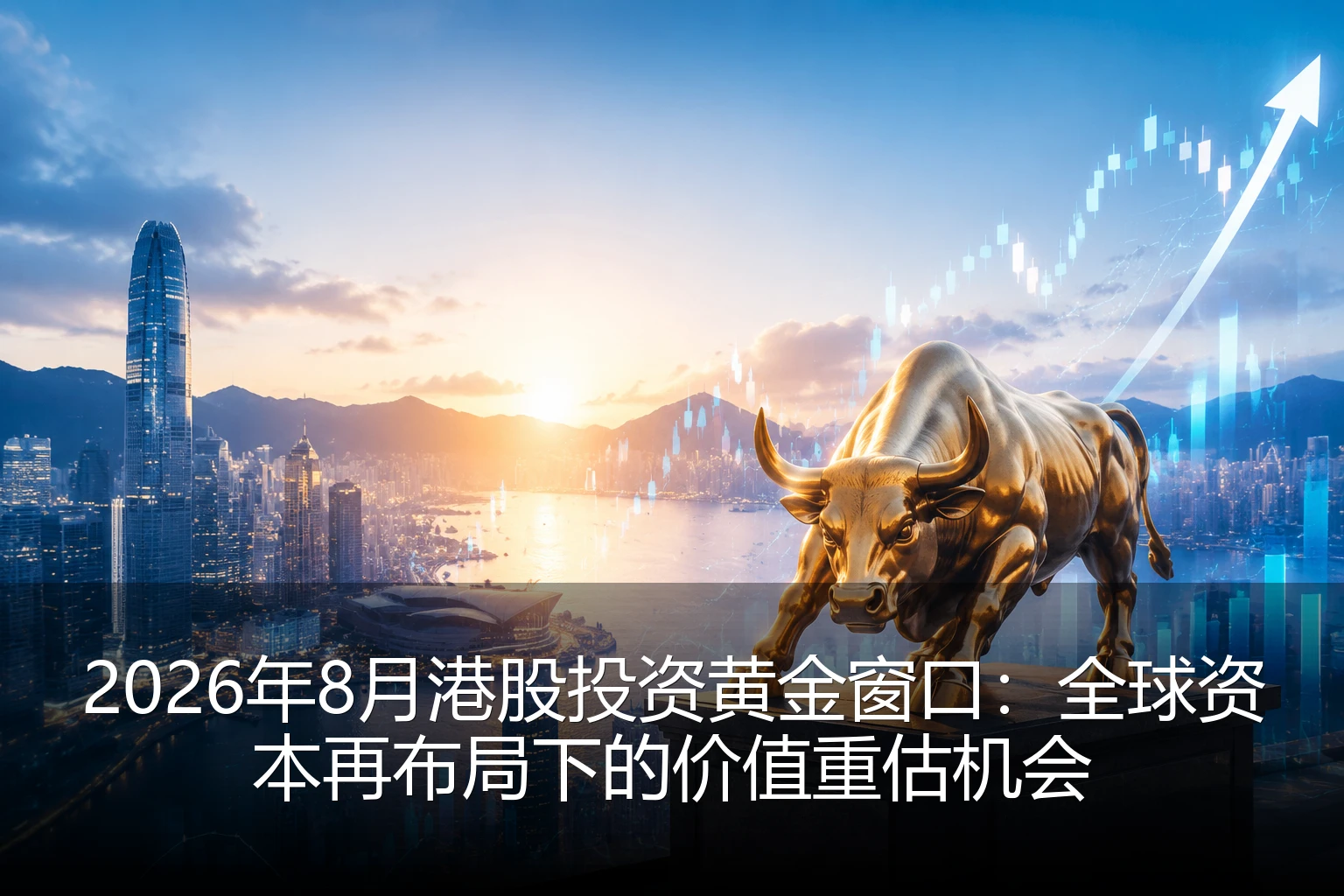
In August 2026, against the backdrop of continuous adjustments in the global economic landscape, the Hong Kong stock market demonstrates unique resilience and attractiveness. With rising expectations of Federal Reserve policy shifts, strengthening of the RMB exchange rate, and deepening reforms in mainland China's capital market, Hong Kong's position as an international financial center has become increasingly prominent, making it a key destination for global reallocation of capital. This article will conduct an in-depth analysis of the latest developments in the Hong Kong stock market, revealing the investment logic and opportunities behind them.
Overall Performance of Hong Kong Stock Market: Safe Haven Effect for Global Capital Emerges
Entering August 2026, the Hong Kong stock market continued its strong performance from the first half of the year. After the Hang Seng Index broke through the 26,000-point mark at the end of July, it experienced some fluctuations in early August but remained generally stable. Notably, the valuation advantage of the Hong Kong stock market remains significant compared to major global markets, with the Hang Seng Index's P/E ratio at only about 9.8 times, far below the over 20 times for US stocks, providing a margin of safety for long-term investors.
Capital flow data shows that southbound funds continue to flow into the Hong Kong stock market, with the net inflow through the Stock Connect channels reaching a new high for the year. This reflects mainland investors' recognition of Hong Kong's value and the improved convenience brought by the continuous enhancement of the Stock Connect mechanism. Meanwhile, northbound funds also show a net inflow trend, indicating that international investors' confidence in Chinese assets is recovering.
Data recently released by the Hong Kong Stock Exchange shows that the total trading volume of the Hong Kong stock market in the first half of 2026 increased by 15% year-on-year, and IPO financing increased by 20% year-on-year, demonstrating continued enhancement of market vitality. Especially after the implementation of the new Rule 18C, the trend of specialized technology companies listing in Hong Kong has resumed, injecting new growth momentum into the market.
Sector Rotation in Hong Kong Stock Market: Technology and New Energy Lead the Market
In terms of sector performance, the Hong Kong stock market in August 2026 showed clear structural differentiation. Technology stocks and new energy sectors became the market's leading growth drivers, with particularly outstanding performance in technology sub-sectors such as artificial intelligence, cloud computing, and semiconductors. This trend is closely related to the global technology development wave and mainland China's industrial upgrading policies.
The artificial intelligence sector's performance in the Hong Kong stock market is particularly eye-catching. With the commercial implementation of AI technologies such as ChatGPT, related companies in the industrial chain have shown rapid growth of performance. AI concept stocks in the Hong Kong market, including large internet platforms, AI chip design companies, and cloud service providers, have generally seen their stock prices rise. Especially those enterprises with core technical advantages and rich application scenarios have received enthusiastic pursuit of capital.
The new energy sector has also shown strong performance. Against the backdrop of advancing global carbon neutrality goals and the implementation of China's "dual carbon" policy, enterprises in the new energy industry chain have development opportunities. Companies in new energy vehicles, photovoltaics, wind power and other sectors in the Hong Kong market have benefited from improved industry prosperity and policy support, showing outstanding performance and their valuations have also been restored.
In contrast, traditional financial and real estate sectors performed relatively weak, but some high-dividend bank stocks and insurance companies still received favor from stable funds, reflecting the defensive characteristics of the Hong Kong stock market. This sector rotation phenomenon reflects investors' balanced allocation between growth value and defensive value against the backdrop of increasing economic uncertainty.
Investment Advantages of Hong Kong Stock Market: Attractiveness from Multiple Factors
The attractiveness of the Hong Kong stock market comes from the combined effect of multiple factors. First, the valuation advantage is the foundation of Hong Kong's long-term investment value. Compared with major global markets, the overall valuation of the Hong Kong stock market is at a historical low, especially the significant discount of mainland China's high-quality enterprises in Hong Kong, providing a margin of safety for value investors.
Second, policy dividends continue to be released. The expansion and optimization of Shenzhen-Hong Kong Stock Connect and Shanghai-Hong Kong Stock Connect have made it more convenient for mainland investors to participate in the Hong Kong stock market; the HKEX's new Rule 18C has facilitated the listing of specialized technology companies; the Hong Kong government has also introduced various measures to attract talent and capital. These policy dividends have jointly enhanced the vitality and attractiveness of the Hong Kong stock market.
Third, it has a high degree of internationalization. As an international financial center, the Hong Kong stock market brings together investors from all over the world, with abundant capital liquidity and mature trading mechanisms. Meanwhile, the Hong Kong stock market has a large number of high-quality mainland Chinese enterprises, including many "new economy" companies that are difficult to list on the A-share market, providing diversified investment choices for investors.
Fourth, the linkage effect with the mainland market has strengthened. With the increasing openness of mainland China's capital market, the linkage between the Hong Kong and A-share markets has continuously strengthened, with arbitrage opportunities and synergies between the two markets increasingly apparent, providing investors with a richer investment strategy space.
Hong Kong Stock Investment Strategy: Balancing Opportunities and Risks
For investors, seizing opportunities in the Hong Kong stock market requires formulating appropriate investment strategies. First, attention should be paid to structural opportunities in the Hong Kong stock market, such as high-growth sectors like technology and new energy, as well as traditional industry leaders with valuation advantages.
Second, it is important to grasp investment opportunities through Stock Connect. With the expansion of Shenzhen-Hong Kong Stock Connect and Shanghai-Hong Kong Stock Connect, the scope of Stock Connect eligible securities continues to expand, lowering the threshold for mainland investors to participate in the Hong Kong stock market. Investors can invest in the Hong Kong stock market through Stock Connect and share in Hong Kong investment opportunities.
Third, attention should be paid to the trading characteristics of the Hong Kong stock market. The Hong Kong stock market implements a T+0 trading mechanism with no price limit circuit breakers, resulting in higher volatility, and investors need to do a good job of risk management. Meanwhile, the trading hours of the Hong Kong stock market are different from those of the mainland market, requiring adaptation to the trading rhythm changes caused by time differences.
Fourth, attention should be paid to policy changes in the Hong Kong stock market. Factors such as HKEX rule adjustments and changes in regulatory policies in both places may affect the market, and investors need to promptly follow policy trends and adjust investment strategies.
Risk Warnings and Outlook
Although the Hong Kong stock market offers abundant investment opportunities, there are also certain risks. First, increasing global economic uncertainty may affect the performance of the Hong Kong stock market. Second, factors such as changes in China-US relations and geopolitical risks may impact the Hong Kong stock market. Third, the Hong Kong stock market has high volatility, and investors need to do a good job of risk management.
Looking ahead, with the continuous advancement of China's economic transformation and upgrading, the consolidation of Hong Kong's position as an international financial center, and the continuous improvement of the interconnection mechanism between the two capital markets, the Hong Kong stock market is expected to maintain its vitality. Especially from the perspective of global asset allocation, the valuation advantage and international characteristics of the Hong Kong stock market will make it an important choice for global capital.
For mainland investors, the Hong Kong stock market provides an important channel for diversifying investments and seizing the growth opportunities of high-quality Chinese enterprises. Participating in Hong Kong stock investment through Stock Connect allows investors to not only share in the dividends of China's economic development but also diversify risks from a single market, making it an important part of asset allocation.
In conclusion, in August 2026, the Hong Kong stock market has shown unique investment value amidst the adjustment of the global economic landscape. Investors should closely follow market dynamics, grasp structural opportunities, balance risks and returns, and find their own investment path in the opportunities and challenges of the Hong Kong stock market.