HK Stock Valuation "Gold Mine" Reappears, Single-Digit PE Attracts Global Smart Money
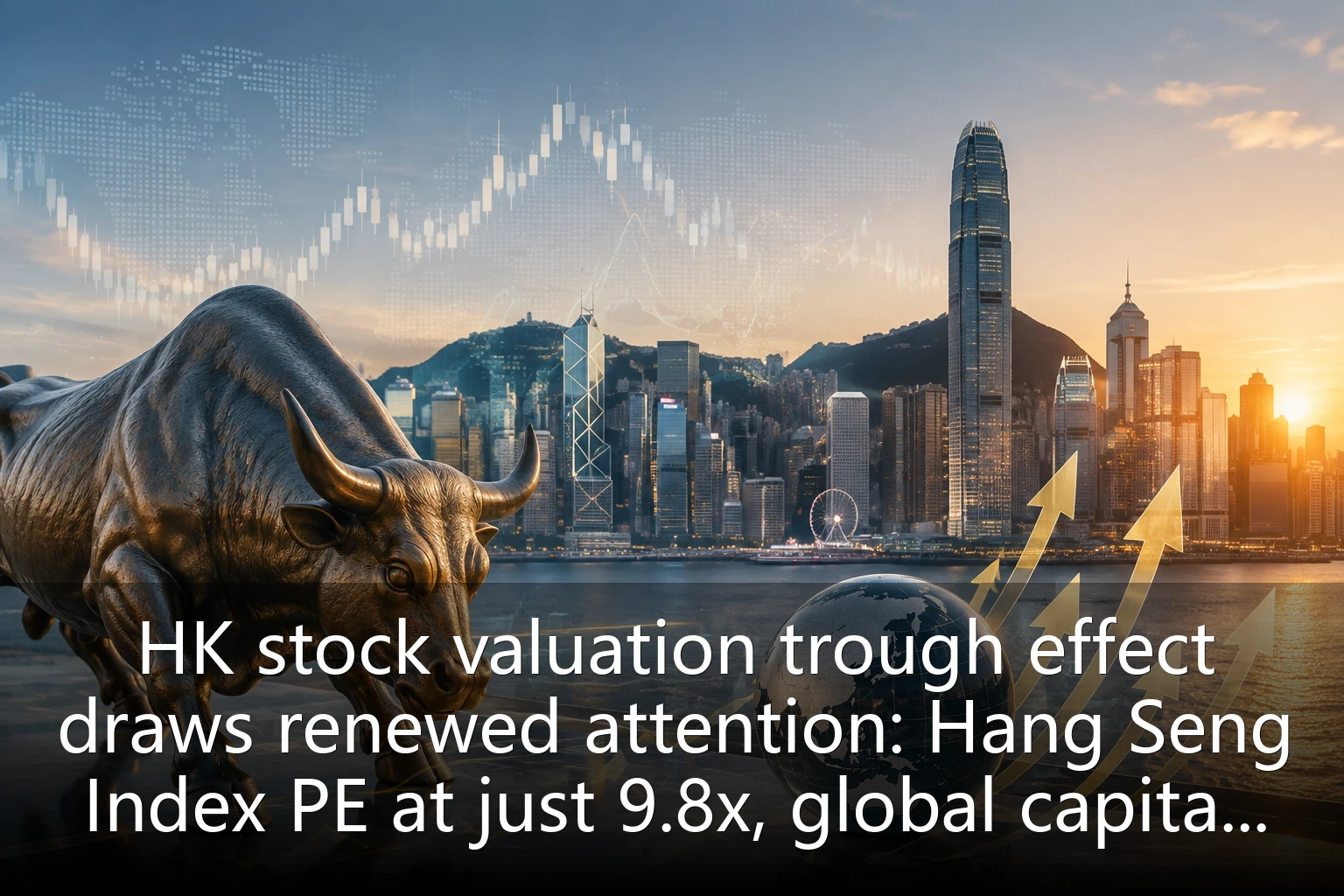
Entering August 2026, after navigating geopolitical disturbances and monetary policy games in the first half of the year, global capital markets are reassessing the cost-effectiveness of major asset classes. For mainland investors, a familiar and highly tempting signal is flashing again—Hong Kong stock valuations have fallen to historically extreme lows. Data shows that as of August 2, the Hang Seng Index trailing price-to-earnings (PE) ratio was only 10.2x, and the Hang Seng China Enterprises Index fell even further to 8.9x. This is not only far below the S&P 500's level of over 20x but also ranks at the bottom among major global stock indices. This extreme valuation discount is becoming the most compelling answer to the question "Why HK Stocks."
The Dual Mispricing Logic Behind Extreme Valuations
The current low valuation of Hong Kong stocks is not due to collapsing fundamentals but rather a "mispricing" caused by multiple sentiment factors. First, policy uncertainty brought by the US election in the first half of the year led global passive funds to adopt an underweight strategy for emerging markets overall. Second, localized escalation in the Sino-US tech rivalry prompted some foreign capital to adopt a blanket risk-aversion approach toward Chinese concept stocks and Hong Kong-listed tech leaders. However, based on the disclosed 2026 interim earnings forecasts for Hong Kong-listed companies, profit growth in the internet, consumer, and advanced manufacturing sectors has generally exceeded expectations. This divergence of "earnings upgrades and valuation downgrades" precisely constitutes the gold mine that value investors dream of.
Southbound Funds: The "Smart Choice" of Mainland Investors
Against the backdrop of highlighted valuation attractiveness, mainland capital is accelerating southward through the Stock Connect channels. Data shows that in July 2026 alone, net southbound purchases reached a staggering HK$102.3 billion, setting a new monthly high for the year. This marks the 18th consecutive month of net southbound inflows. Unlike previous retail-driven trend-chasing, this round of southbound capital exhibits clear institutional and long-term characteristics. Broad-based index ETFs, high-dividend state-owned enterprises, and oversold internet leaders have become the main directions for capital inflows. For mainland investors, the massive deployment of southbound capital itself is a strong signal: amid the coexistence of structural overvaluation and asset scarcity in the A-share market, the valuation trough value of Hong Kong stocks cannot be ignored.
Dividend Yield Advantage: A Safe Haven for High-Yield Assets
In the current environment where global interest rates remain relatively high, the high-dividend nature of Hong Kong stocks provides investors with a solid safety cushion. The overall dividend yield of the Hang Seng High Dividend Yield Index currently stands between 6.5% and 7%, far exceeding the yield on mainland 10-year government bonds. Traditional blue-chip stocks represented by banks, energy, and telecommunications not only offer stable dividends but also demonstrate resilient operating cash flows in an inflationary environment. For long-term capital seeking stable returns, this "fixed-income-like" equity asset allocation is a key consideration for choosing Hong Kong stocks over other high-volatility markets.
Structural Opportunities: From Internet to Advanced Manufacturing
Beyond low valuations and high dividends, another major allure of the Hong Kong stock market lies in its unique industry structure. Hong Kong stocks offer internet platform economy leaders, biopharmaceutical giants, and certain international consumer brands that are relatively scarce in the A-share market. With the continued impact of the new Chapter 18C listing rules, more and more specialist technology companies are choosing to list in Hong Kong, further elevating the tech content of the Hong Kong market. In the second half of 2026, with the commercialization of AI and the start of a smart hardware cycle, semiconductors, consumer electronics, and SaaS service providers in Hong Kong are becoming the new main themes for capital exploration. This composite structure, combining traditional value with cutting-edge growth, is a unique advantage distinguishing Hong Kong from other markets.
Signs of Foreign Capital Return: Short Covering and Active Allocation
Notably, since late July, international investment banks have collectively upgraded their ratings on Hong Kong stocks. In its latest Asia-Pacific strategy report, Morgan Stanley upgraded its rating on Hong Kong stocks from "Neutral" to "Overweight," citing the bottoming stabilization of China's macroeconomy and the unexpected resilience of corporate earnings. Meanwhile, data on open interest for Hang Seng Index futures shows that short positions are rapidly decreasing. This technical short covering, combined with the entry of fundamentally driven long-term capital, is creating a resonance effect for a valuation repair rally. For mainland investors, when foreign capital begins to "admit mistakes and cover shorts," it is often the eve of a trend-driven market move.
How Can Investors Seize Hong Kong Stock Opportunities?
Faced with the current valuation advantage of Hong Kong stocks, investors need to formulate strategies based on their own risk preferences. Conservative investors can focus on constituents of the Hang Seng High Dividend Yield Index, using low valuations and high dividends to build a defensive core position; aggressive investors can pay attention to tech ETFs within the Stock Connect scheme and internet leaders with clear earnings reversals. Additionally, as Hong Kong stocks operate under T+0 settlement and have no price fluctuation limits, investors must manage their positions and control risks while enjoying high-beta returns. Overall, in the current global asset comparison, the extreme valuation discount of Hong Kong stocks cannot persist indefinitely, and the law of mean reversion will eventually take effect, which is the best footnote for "Why HK Stocks."